Beyond the Trail: Connecting Niagara’s Landscapes, Communities and Local Economies
How trail connectivity, geo-tourism, cultural heritage, wine and culinary experiences can create new opportunities for sustainable economic development across Niagara.
What if Niagara’s trails were more than places to hike, cycle or enjoy the outdoors?
What if they were also pathways to local businesses, cultural attractions, wineries, restaurants and communities across the region?
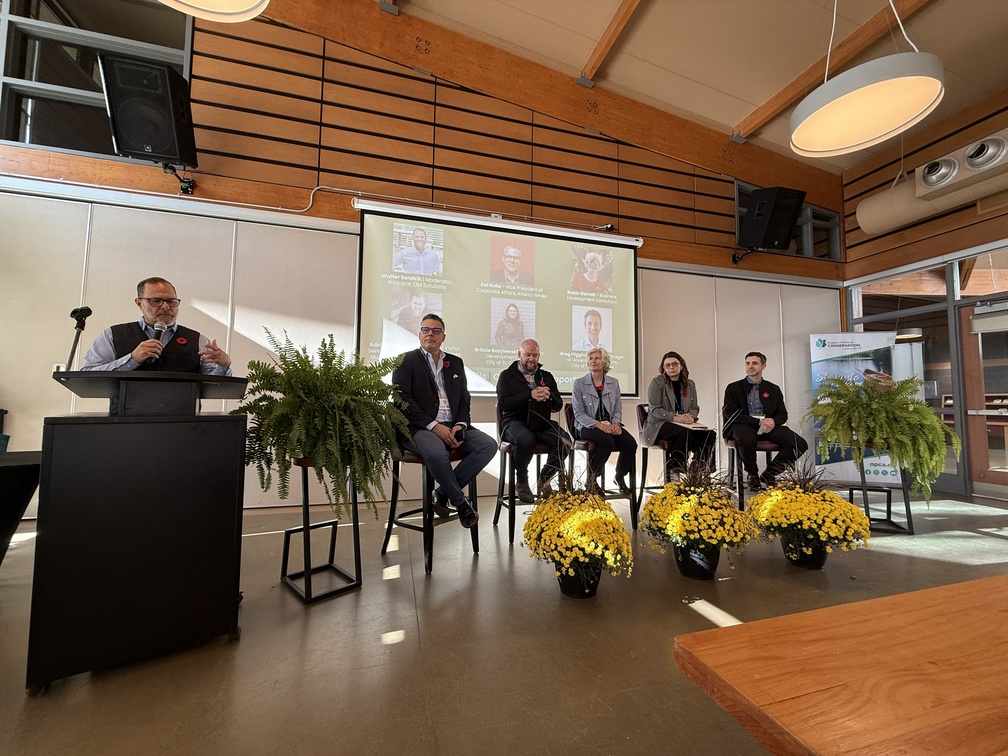
That was one of the central themes of the economic development panel at the 2026 Niagara Geopark Trail Network Summit, held November 5 at the Niagara Peninsula Conservation Authority’s Ball’s Falls Centre for Conservation.
The discussion explored how better trail connectivity, regional collaboration and a shared approach to tourism could strengthen Niagara’s economy while creating more meaningful experiences for residents and visitors.
The opportunity isn’t necessarily about creating more attractions. It’s about connecting the incredible experiences Niagara already has to offer.
Trails as Economic Infrastructure
Trails and active transportation networks are often viewed primarily as recreational amenities. But they also have the potential to become important drivers of economic and community development.
A connected trail system can bring visitors into downtowns, villages and business districts, encouraging them to explore local shops, cafés, restaurants and attractions.
As Britnie Bazylewski, Economic Development Officer with the City of St. Catharines, explained:
“Every trailhead I look at is an opportunity to create the connective tissue to move that compelling draw from an ecotourism visitor into my business districts within the city.”
It’s a perspective that applies across Niagara.
Whether someone is hiking the Niagara Escarpment, cycling through wine country or exploring a local conservation area, there are opportunities to connect those experiences with nearby communities and businesses.
Better connections can encourage visitors to explore more of the region, spend more time in local communities and discover places they might otherwise miss.
Connecting Geo-Tourism, Wine, Culinary and Cultural Heritage
Niagara’s geological landscape has shaped much of what makes the region distinctive.
The Niagara Escarpment, ancient shorelines, waterways and glacial landscapes have influenced our communities, agricultural traditions and cultural heritage.
They also contribute to the conditions that support Niagara’s internationally recognized wine industry.
Geo-tourism offers an opportunity to connect these stories with the experiences visitors already enjoy.
Imagine cycling along the Escarpment, stopping at a winery to learn how the landscape influences grape growing, visiting a historic village and enjoying a meal featuring locally grown ingredients.
Or following a trail that connects a geological landmark with an Indigenous cultural interpretation site, a museum and a nearby community.
These are the kinds of experiences that can make Niagara more than a collection of individual attractions.
By connecting the landscape with the people, places and stories that make it unique, we can create richer visitor experiences while supporting local businesses and communities.
One Region, Many Opportunities
Another important theme from the panel was the need to think beyond municipal boundaries.
Visitors don’t experience Niagara as 12 separate municipalities.
They move between communities, attractions and landscapes based on their interests, whether that’s hiking, cycling, exploring cultural heritage, enjoying local food or discovering Niagara’s wineries.
Yet many of the systems used to promote and connect these experiences are still organized within individual municipal boundaries.
Greater collaboration among municipalities, tourism organizations, trail operators, businesses and community partners can help create a more seamless regional experience.
It also creates opportunities to share resources, coordinate investments and develop experiences that connect urban and rural communities.
The panel reinforced the value of working together rather than competing for the same visitors.
Niagara’s strength lies in the diversity of its communities and experiences. Connecting them creates opportunities that no single municipality or organization can achieve alone.
Investing in Tourism Is Investing in Communities
The benefits of better trail connectivity extend beyond tourism.
Connected trails and active transportation systems can improve access to recreation, support local businesses, strengthen community identity and create opportunities for healthier, more connected communities.
They can also help link neighbourhoods with public spaces, cultural attractions and commercial areas.
As Bazylewski emphasized during the discussion:
“The investment into tourism isn’t an investment into tourism. It’s an investment into our community.”
This broader perspective is particularly important as municipalities and organizations look for ways to make the most of limited resources.
Investments that benefit visitors can also improve the quality of life for residents.
And when communities work together, those investments can have a greater regional impact.
Bringing It All Together Through the Niagara Geopark Trail Network
The Niagara Geopark Trail Network is being developed with this connected approach in mind.
More than a trail-finding tool, the evolving digital platform will bring together trails, geosites, Indigenous histories, cultural landmarks, communities and visitor destinations across Niagara.
Through the emerging Digital Ranger, residents and visitors will be able to discover places and experiences based on their interests, whether that’s hiking, cycling, geology, cultural heritage, wine, food or local exploration.
The goal is to make it easier to discover Niagara’s many layers while creating opportunities for tourism operators, heritage organizations, municipalities and local businesses to connect their offerings.
This approach also supports a broader vision for sustainable geo-tourism — encouraging people to explore responsibly, learn about the places they visit and contribute to the communities they experience.
A More Connected Niagara
Niagara already has an extraordinary network of trails, natural landscapes, wineries, restaurants, cultural attractions and historic communities.
The opportunity is to bring them together through better connections, shared storytelling and regional collaboration.
The economic development panel reinforced that trails are not simply routes between destinations. They can be catalysts for stronger local economies, more connected communities and a richer understanding of the region.
For Niagara Geopark, this is an important part of the vision behind the Trail Network: connecting the places, people and experiences that make Niagara unique.
Because when we connect our trails, we connect our communities — and create opportunities for the entire region.
The Niagara Trail Summit Blog Series is supported by the Greenbelt Foundation.