Connecting Niagara: One Region, Many Stories, One Shared Future
The 2026 Niagara Geopark Trail Network Summit brought together Indigenous knowledge, geological heritage, tourism and economic development to explore a more connected future for Niagara.
What if we could experience Niagara not as 12 separate municipalities, but as one interconnected landscape filled with stories, trails, communities and opportunities to explore?
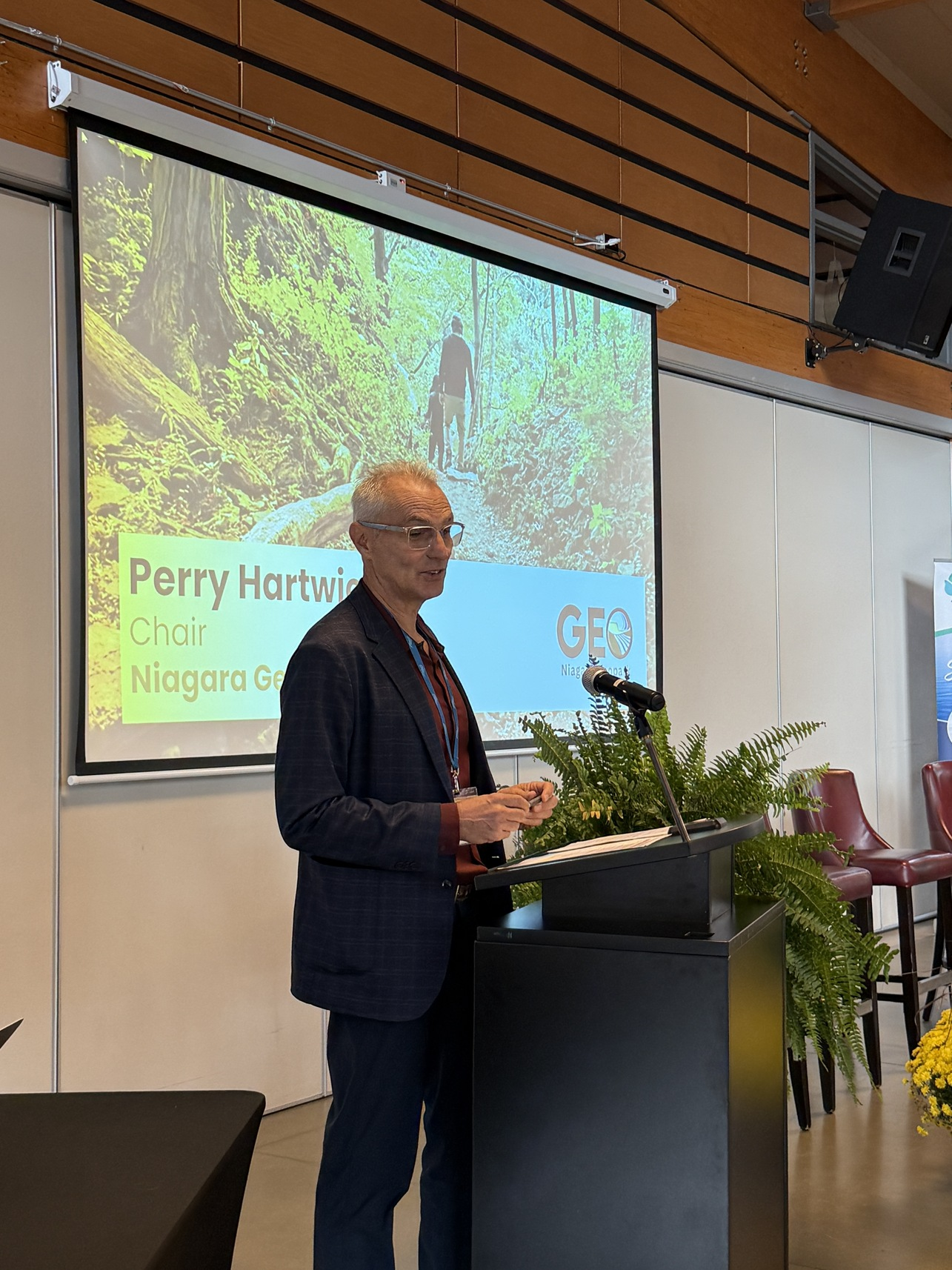
That vision was at the heart of the 2026 Niagara Geopark Trail Network Summit, held November 5 at the Niagara Peninsula Conservation Authority’s Ball’s Falls Centre for Conservation.
The summit brought together Indigenous leaders, municipalities, tourism professionals, conservation organizations, trail groups, businesses and community partners to explore how Niagara’s trails and cultural heritage can support education, reconciliation, responsible tourism and regional economic development.
Throughout the day, one message emerged: Niagara has extraordinary natural and cultural assets. There is a real opportunity to connect it all together in ways that benefit residents, visitors and communities across the region.
Understanding the Trails That Connected Niagara
Long before modern roads or municipal boundaries, Indigenous Peoples travelled throughout Niagara along extensive networks connecting communities, waterways, gathering places and trading routes.
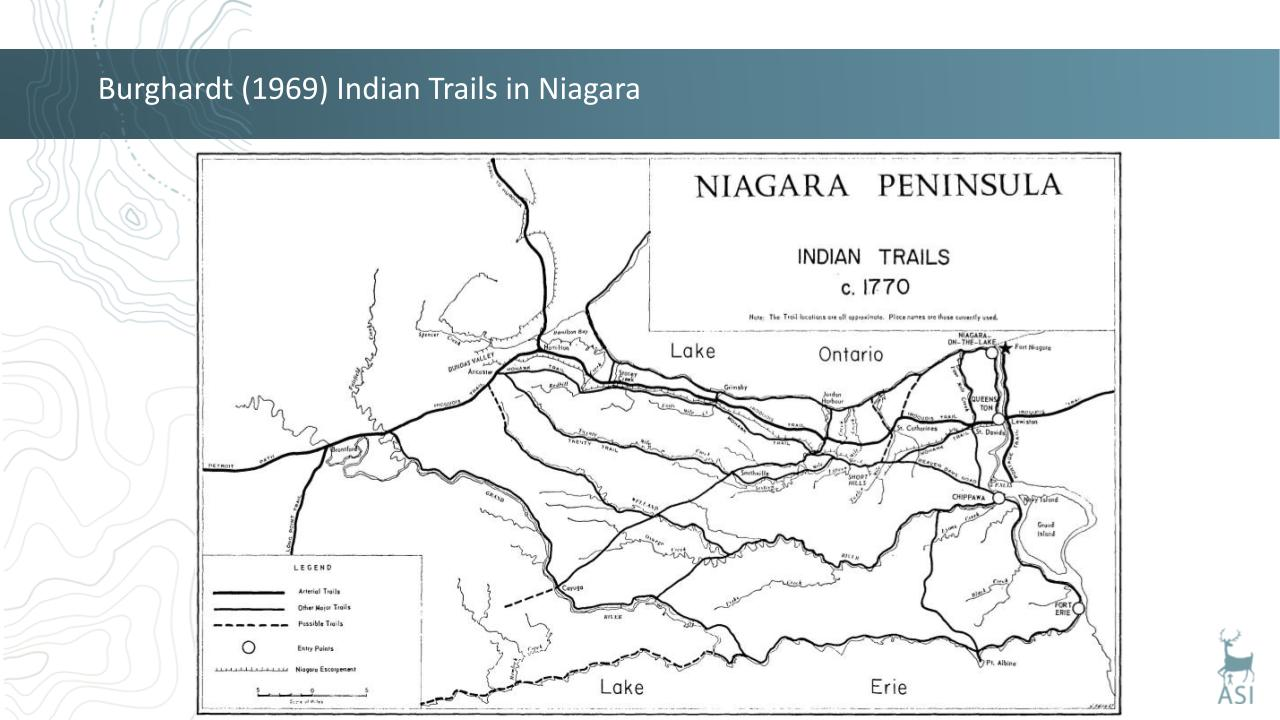
Martin S. Cooper, Senior Associate with Archaeological Services Inc. (ASI), presented Long Stretches of Country to Traverse: Indigenous Trail Systems, exploring how Niagara’s geography influenced these ancient routes.
The Iroquois Trail followed the shoreline of Glacial Lake Iroquois, while the Mohawk Trail extended along the Niagara Escarpment. Together, these routes connected Niagara with extensive travel networks reaching across northeastern North America.
As Martin explained:
“People often underestimate the amount of travel that was done even before the Europeans arrived.”
His archaeological research also revealed the close relationship between Indigenous trails and settlement patterns, with all 24 known Neutral sites in northern Niagara located along the two major east-west routes.
These findings demonstrate how geology influenced where people travelled, established communities, grew food and accessed natural resources.
Indigenous Trails as Living Heritage
Tim Johnson of the Niagara Academy for Indigenous Relations (NAIR) explored how Indigenous cultural mapping, public art and interpretive projects are helping reconnect people with these pathways today.
“We treat these pathways as living pathways rather than historical artifacts.”
Tim emphasized the importance of Indigenous knowledge, language and leadership in sharing these stories.
Through collaboration with Indigenous partners, Niagara Geopark is installing Indigenous Trails interpretive signs across the region, helping residents and visitors discover the histories and cultural significance of these pathways.
The first sign was unveiled at Brown Homestead in June 2026. Additional Indigenous Trail signs have been installed at four Niagara Peninsula Conservation Authority Geosites, Willowbank School of Restoration Arts in Queenston and Rotary Park in St. Catharines.
Together with Indigenous cultural mapping and educational initiatives, the signs are helping create opportunities for place-based learning and reconciliation.
They also reinforce an important principle: Indigenous histories are not simply stories of the past. They are part of Niagara’s living cultural landscape.
Connecting Trails, Tourism and Local Economies
The summit’s economic development discussion explored how trails can become more than recreational amenities.
Connected trail networks can encourage visitors to explore local communities, discover cultural attractions and support restaurants, shops, wineries and other businesses.
Britnie Bazylewski, Economic Development Officer with the City of St. Catharines, described the opportunity:
“Every trailhead I look at is an opportunity to create the connective tissue to move that compelling draw from an ecotourism visitor into my business districts within the city.”
The discussion also highlighted the importance of regional collaboration.
Visitors don’t experience Niagara according to municipal boundaries. They move between communities based on their interests, whether that’s hiking, cycling, wine, food, cultural heritage or outdoor recreation.
Connecting these experiences can encourage longer visits, support local businesses and create a more compelling regional destination.
As Britnie emphasized:
“The investment into tourism isn’t an investment into tourism. It’s an investment into our community.”
Introducing the Niagara Geopark Trail Network
The summit also provided an opportunity to share the vision for the developing Niagara Geopark Trail Network.
More than a trail-finding tool, the evolving digital platform will connect trails, geosites, Indigenous histories, cultural landmarks, communities and visitor destinations across all 12 Niagara municipalities.
Through the emerging Digital Ranger, residents and visitors will be able to explore the region based on their interests, discover places they might otherwise miss and build more meaningful experiences.
The platform is being developed to connect digital discovery with real-world exploration while supporting education, stewardship and responsible tourism.
It also creates new opportunities for collaboration among municipalities, tourism organizations, cultural institutions, conservation groups and local businesses.
Working Toward UNESCO Global Geopark Designation
Niagara Geopark continues to pursue designation as a UNESCO Global Geopark.
An important milestone has been reached: On November 2, The 11th Session of the UNESCO Global Geoparks Council unanimously voted to recommend Niagara Geopark be designated as a UNESCO Global Geopark.
The designation is not yet official, and the outcome of the process is expected in the coming months.
The recommendation recognizes the years of work and collaboration that have gone into connecting Niagara’s geological heritage with education, conservation, Indigenous knowledge and sustainable development.
Regardless of the final decision, that work is already creating opportunities for communities across Niagara.
One Region, Many Stories
The summit reinforced that Niagara’s greatest strength lies in the connections between its landscapes, communities, histories and people.
Our trails can connect more than destinations. They can connect geological heritage with Indigenous knowledge, cultural experiences with local businesses, and visitors with the communities they explore.
By working together across municipal and organizational boundaries, Niagara has an opportunity to build a more connected, sustainable and meaningful approach to tourism and regional discovery.
Niagara is more than what appears at the surface. The Niagara Geopark Trail Network is helping us discover the stories and connections that make this region extraordinary.
The Niagara Trail Summit Blog Series is supported by the Greenbelt Foundation.